
National Parks in Canada represent a vast and diverse network of protected areas showcasing the country’s breathtaking natural beauty. From the majestic Rocky Mountains to the serene boreal forests and dramatic coastlines, these parks offer unparalleled opportunities for recreation, exploration, and a deeper understanding of Canada’s rich ecological heritage. This guide delves into the history, ecology, and recreational opportunities within Canada’s national park system, providing insights for both seasoned adventurers and first-time visitors.
We’ll explore iconic parks like Banff and Jasper, comparing their unique attractions and highlighting the diverse ecosystems they support. We will also discuss sustainable tourism practices, emphasizing the importance of responsible travel and conservation efforts. Whether you’re interested in birdwatching, hiking challenging trails, or simply enjoying the tranquility of nature, this guide offers a wealth of information to help you plan your unforgettable Canadian national park adventure.
Overview of Canada’s National Parks System: National Parks In Canada
Canada’s national park system boasts a rich history, evolving from a single park to a vast network safeguarding the country’s remarkable natural and cultural heritage. Its development reflects a growing awareness of the importance of conservation and the need to protect diverse ecosystems for present and future generations. The system’s mandate extends beyond mere preservation, encompassing education, research, and responsible recreation.Parks Canada, the agency responsible for managing Canada’s national parks, national historic sites, and national marine conservation areas, has a multifaceted mandate.
Its primary objective is to protect and present these treasured places for the benefit of all Canadians and the world. This involves balancing the preservation of ecological integrity with opportunities for public enjoyment and understanding of Canada’s natural and cultural heritage. Key objectives include ecological integrity maintenance, public education and engagement, and sustainable tourism management.
Geographical Distribution of Canada’s National Parks
Canada’s national parks are distributed across ten provinces and three territories, reflecting the nation’s vast and diverse geography. This widespread distribution ensures representation of various ecosystems, from the Arctic tundra to temperate rainforests, and from alpine meadows to coastal landscapes. The parks are not uniformly distributed; some regions, particularly those with high biodiversity or significant historical significance, have a higher concentration of parks.
Regional Overview of National Parks
To better understand the diversity within the Canadian National Parks system, it’s helpful to organize them into geographical regions. This approach highlights the unique characteristics of each area.
Parks of the Atlantic Region
This region, encompassing Newfoundland and Labrador, Prince Edward Island, Nova Scotia, and New Brunswick, features parks showcasing dramatic coastlines, ancient forests, and rich maritime history. For example, Fundy National Park in New Brunswick is known for its exceptionally high tides and diverse flora and fauna. Gros Morne National Park in Newfoundland and Labrador exhibits unique geological formations, showcasing the power of tectonic forces.
These parks provide opportunities for hiking, kayaking, whale watching, and exploring historical sites.
Parks of Quebec and Ontario
Quebec and Ontario house a significant number of national parks, representing a diverse range of landscapes. In Quebec, La Mauricie National Park offers stunning lakes and forests, while Forillon National Park boasts dramatic cliffs and coastal vistas. Ontario’s national parks, such as Pukaskwa National Park on Lake Superior, showcase rugged shorelines, boreal forests, and significant Indigenous history. These parks provide diverse recreational opportunities, from canoeing and hiking to exploring historical sites.
Parks of the Prairie Provinces
Manitoba, Saskatchewan, and Alberta are home to national parks representing prairie grasslands, badlands, and mountain landscapes. Grasslands National Park in Saskatchewan preserves the unique ecology of the North American prairies, while Waterton Lakes National Park in Alberta, part of a transboundary UNESCO World Heritage Site with Glacier National Park in Montana, presents stunning mountain scenery and pristine lakes. These parks offer opportunities for wildlife viewing, hiking, and exploring the rich history of the Canadian prairies.
Parks of the Western Cordillera
British Columbia, Yukon, and the Northwest Territories contain some of Canada’s most iconic national parks, characterized by majestic mountain ranges, glaciers, and vast wilderness areas. Yoho National Park in British Columbia, renowned for its turquoise lakes and towering peaks, stands alongside Jasper and Banff National Parks in Alberta, forming part of the Canadian Rockies, a globally recognized mountain range.
Kluane National Park and Reserve in Yukon is home to North America’s highest peak, Mount Logan. These parks are popular destinations for hiking, mountaineering, wildlife viewing, and exploring the rugged beauty of the Canadian Rockies and the Yukon wilderness.
Parks of the Arctic Region, National parks in Canada
Canada’s Arctic national parks represent some of the most remote and pristine wilderness areas on Earth. These parks, located in Nunavut and the Northwest Territories, showcase the unique beauty and fragility of the Arctic ecosystem, including vast tundra landscapes, glaciers, and unique wildlife. Auyuittuq National Park in Nunavut, for example, offers stunning views of fjords and glaciers, while Tuktut Nogait National Park, also in Nunavut, protects a significant caribou calving ground.
These parks are often accessed via air and provide opportunities for wilderness adventures, scientific research, and cultural understanding of the Arctic.
Popular National Parks
Canada boasts a vast network of national parks, each offering unique experiences. This section will compare and contrast three of the most popular: Banff, Jasper, and Algonquin, highlighting their diverse ecosystems and visitor offerings. These parks represent a range of geographical locations and ecological zones, showcasing the incredible biodiversity of Canada’s natural heritage.
Ecosystem Diversity in Banff, Jasper, and Algonquin
Banff and Jasper National Parks, located in the Canadian Rockies of Alberta, share a similar mountainous terrain but exhibit distinct ecological variations. Banff, closer to Calgary, features lush valleys, alpine meadows, and turquoise glacial lakes like Lake Louise and Moraine Lake. Its lower elevations support coniferous forests, while higher altitudes transition to alpine tundra. Jasper, further north and larger than Banff, encompasses a more extensive range of elevations, resulting in greater biodiversity.
It boasts vast stretches of boreal forest, alongside alpine landscapes similar to Banff, but also includes areas of subalpine fir and spruce forests. Algonquin Provincial Park (while not a National Park, it’s included for comparison due to its popularity and ecological significance), situated in Ontario, represents a different ecosystem entirely. It’s characterized by vast boreal forests, numerous lakes and rivers, and extensive wetlands, supporting a diverse range of wildlife adapted to a more temperate climate.
The three parks, therefore, exemplify the variety of ecosystems found across Canada.
Comparative Analysis of Banff, Jasper, and Algonquin
The following table compares key aspects of these three popular parks:
| Park | Approximate Annual Visitor Numbers | Accessibility | Key Activities |
|---|---|---|---|
| Banff National Park | Over 4 million | Relatively easy access from Calgary International Airport; well-developed road network within the park. | Hiking, skiing, snowboarding, wildlife viewing (elk, deer, bears), scenic drives, canoeing, kayaking. |
| Jasper National Park | Over 2.5 million | Good access from Edmonton; more remote than Banff, requiring longer drives to access certain areas. | Hiking, backpacking, wildlife viewing (bears, wolves, caribou), scenic drives (Icefields Parkway), whitewater rafting, horseback riding. |
| Algonquin Provincial Park | Over 1 million | Accessible from various points in Ontario; a network of roads and trails, but some areas require longer drives or portaging. | Hiking, canoeing, kayaking, fishing, wildlife viewing (moose, black bears, wolves), camping, backcountry exploration. |
National Parks Eco-Lodges and Green Travel
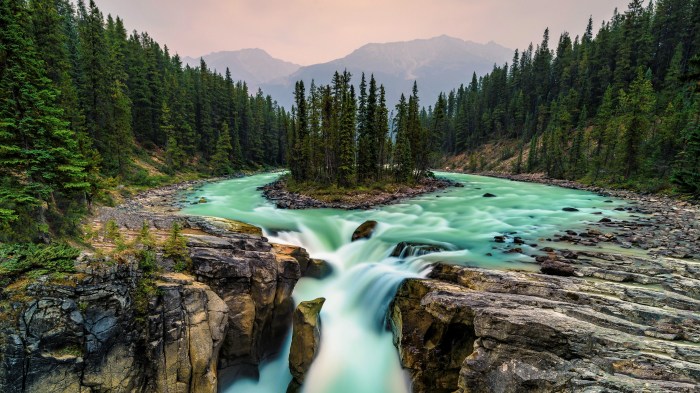
Canada’s national parks offer unparalleled natural beauty, and eco-lodges play a vital role in ensuring these environments remain pristine while providing exceptional visitor experiences. By prioritizing sustainability, these lodges minimize their environmental footprint and encourage responsible tourism practices, allowing visitors to connect with nature while contributing to its preservation.Eco-lodges within Canada’s national parks are increasingly adopting sustainable practices, transforming the way tourism interacts with these delicate ecosystems.
This shift towards eco-conscious tourism not only protects the parks but also enhances the overall visitor experience, offering a unique opportunity to connect with nature in a responsible and meaningful way.
Eco-lodge Practices Promoting Sustainable Tourism
Many eco-lodges within Canada’s national parks implement a variety of environmentally friendly practices. These efforts are crucial for preserving the integrity of these natural wonders for future generations. These practices often go beyond simply reducing waste; they aim to create a positive environmental impact.
- Renewable Energy Sources: Many lodges utilize solar or geothermal energy to reduce their reliance on fossil fuels, minimizing their carbon footprint. Imagine a lodge nestled in the mountains, powered by the sun’s energy, a testament to their commitment to sustainability.
- Waste Reduction and Recycling: Comprehensive recycling programs are commonplace, diverting waste from landfills and promoting responsible resource management. This includes composting food waste and implementing robust recycling systems for plastics, paper, and glass.
- Water Conservation: Efficient plumbing fixtures and water-saving strategies are employed to reduce water consumption. Low-flow showerheads and toilets are standard, reflecting a commitment to conserving this precious resource.
- Sustainable Sourcing: Lodges often prioritize sourcing food and supplies locally, reducing transportation emissions and supporting local communities. This might involve partnering with nearby farms and businesses to procure fresh, seasonal ingredients.
- Environmental Education Programs: Many lodges incorporate educational initiatives to raise awareness about the local ecosystem and promote responsible visitor behaviour. This could include guided nature walks, interpretive programs, or workshops on responsible wildlife viewing.
Sample Sustainable Multi-Day Trip to Banff National Park
This itinerary focuses on minimizing environmental impact while maximizing the experience of Banff National Park’s beauty.
- Day 1: Arrive in Banff townsite, utilizing public transportation or carpooling whenever possible. Check into an eco-certified lodge. Spend the afternoon exploring Banff townsite on foot, visiting local shops and restaurants that prioritize sustainability.
- Day 2: Hike to Johnston Canyon, using the park’s shuttle service to reduce traffic congestion. Pack a reusable water bottle and snacks to avoid generating waste. Observe wildlife from a respectful distance and leave no trace.
- Day 3: Take a guided wildlife tour with a reputable operator committed to sustainable practices. Learn about the park’s ecosystem and the importance of responsible wildlife viewing. Enjoy a locally sourced dinner at your lodge.
- Day 4: Explore Lake Louise and Moraine Lake using the park’s shuttle system. Enjoy a picnic lunch using reusable containers and pack out all trash. Take in the stunning scenery while respecting the delicate alpine environment.
- Day 5: Depart from Banff, utilizing public transportation or carpooling whenever possible.
Tips for Minimizing Environmental Impact During a National Park Visit
Before embarking on your journey, consider these simple yet effective ways to minimize your environmental impact.
- Plan ahead: Research your destination and choose eco-friendly transportation options whenever possible. Pack appropriately to avoid unnecessary purchases on-site.
- Leave no trace: Pack out everything you pack in. Dispose of waste properly and avoid disturbing natural habitats.
- Respect wildlife: Observe animals from a safe distance and never feed them. Your actions can have a significant impact on their behaviour and survival.
- Conserve water and energy: Be mindful of your water and energy consumption in lodges and campsites. Turn off lights and appliances when not in use.
- Support local businesses: Patronize local businesses and restaurants that prioritize sustainability. This helps support the local economy and promotes environmentally conscious practices.
Birdwatching Destinations in Canadian National Parks
Canada’s vast and diverse ecosystems provide exceptional habitats for a wide array of bird species, making its national parks prime locations for birdwatching enthusiasts. From the boreal forests of the north to the Pacific coastline, a remarkable diversity of avian life thrives within these protected areas, offering unparalleled opportunities for observation and study. The following highlights some of the best locations for experiencing this avian richness.
Top Five Birdwatching National Parks
Five Canadian national parks consistently rank among the best for birdwatching, each offering unique avian experiences. Their popularity stems from a combination of factors including high biodiversity, accessibility, and well-established birdwatching trails and resources.
- Point Pelee National Park, Ontario: Located on a peninsula jutting into Lake Erie, this park is a crucial migratory stopover for millions of birds. Its diverse habitats, including Carolinian forest, wetlands, and open fields, support a wide range of species.
- Forillon National Park, Quebec: Situated on the Gaspé Peninsula, Forillon offers dramatic coastal scenery and a rich variety of birdlife. Its location along the migratory route makes it a hotspot for observing both land and seabirds.
- Waterton Lakes National Park, Alberta: This park, part of the Waterton-Glacier International Peace Park, boasts diverse habitats ranging from alpine meadows to prairie grasslands. This variety supports a rich avifauna, including several species of raptors.
- Pacific Rim National Park Reserve, British Columbia: This park’s coastal rainforests and beaches provide habitat for a remarkable diversity of seabirds, shorebirds, and forest birds. Its rugged coastline offers stunning views and opportunities for observing birds in their natural environment.
- Fundy National Park, New Brunswick: Known for its exceptionally high tides, Fundy National Park offers unique habitats along its coastline and in its inland forests. This diverse environment attracts a variety of bird species, some of which are unique to the Atlantic coast.
Unique Bird Species and Habitats
Each park harbors unique avian species adapted to their specific environments.
- Point Pelee National Park: Prothonotary Warbler (bright yellow, nesting in cavities near water), Kirtland’s Warbler (rare and endangered, prefers young jack pine forests), and various warbler species.
- Forillon National Park: Northern Gannet (large white seabird with black wingtips, nests on cliffs), Razorbill (small black and white auk), and peregrine falcon (powerful raptor).
- Waterton Lakes National Park: Bald Eagle (large brown and white eagle, nests near water), Osprey (fish-eating raptor), and various songbirds found in the grasslands and forests.
- Pacific Rim National Park Reserve: Marbled Murrelet (small seabird, nests in old-growth forests), Black Oystercatcher (large black shorebird with bright orange bill), and various woodpeckers.
- Fundy National Park: Black Guillemot (small black and white seabird), Common Eider (large diving duck), and various migratory songbirds.
Visual Guide of Common Bird Species
A visual guide would showcase three common species, emphasizing their distinguishing features.
- Prothonotary Warbler: The illustration would depict its vibrant yellow plumage, contrasting with its small size and relatively short, slightly pointed bill. Its dark eyes and legs would be clearly visible. The image would show it perched on a branch, perhaps near water, to reflect its habitat preference.
- Bald Eagle: The illustration would showcase its massive size, brown body, and striking white head and tail. The powerful hooked beak and strong talons would be clearly detailed. The image could show it perched on a tree overlooking a body of water, highlighting its predatory nature.
- Black Oystercatcher: The illustration would highlight its distinctive bright orange bill, contrasting sharply with its entirely black plumage. Its relatively long legs and slightly upturned bill would be noticeable. The image would depict it on a rocky shore, foraging for shellfish.
Forest Adventures and Activities
Canada’s national parks offer a diverse range of forest adventures, catering to various skill levels and interests. From gentle strolls through old-growth forests to challenging hikes through rugged mountains, the possibilities are vast and varied. These experiences provide opportunities for both physical activity and profound connection with nature, allowing visitors to appreciate the beauty and tranquility of Canada’s wilderness.
Hiking Trails by Difficulty Level
The difficulty of hiking trails in Canadian national parks is typically categorized as easy, moderate, or difficult, with trail descriptions often including details on length, elevation gain, and terrain type. Easy trails are generally well-maintained, relatively flat, and suitable for families with young children. Moderate trails may involve some elevation changes and slightly rougher terrain, requiring a moderate level of fitness.
Difficult trails are characterized by steep inclines, challenging terrain, and longer distances, requiring a high level of fitness and experience.
For example, the easy trail to Johnston Canyon in Banff National Park offers stunning views of waterfalls with minimal elevation gain and is approximately 1.1km round trip. In contrast, the challenging Skyline Trail in Jasper National Park boasts breathtaking panoramic views but involves significant elevation changes and a length of approximately 44 km. The difficulty of any trail is also influenced by factors such as weather conditions and personal fitness levels.
Canoeing and Kayaking Opportunities
Many Canadian national parks feature pristine lakes and rivers ideal for canoeing and kayaking. These activities offer a unique perspective on the park’s landscape, allowing visitors to explore secluded bays, observe wildlife from a different vantage point, and enjoy the peaceful rhythm of paddling. Canoe and kayak rentals are often available within or near the parks, providing convenient access to this enjoyable outdoor pursuit.
Parks like Algonquin Provincial Park in Ontario and Killarney Provincial Park are renowned for their extensive paddling opportunities.
Safety Guidelines for Forest Adventures
Prior to embarking on any forest adventure, thorough preparation is crucial for a safe and enjoyable experience. This includes checking weather forecasts, informing someone of your planned route and expected return time, carrying appropriate gear such as a map, compass, first-aid kit, and sufficient water and food, and being aware of potential hazards such as wildlife encounters and changing weather conditions.
Furthermore, staying on marked trails, respecting wildlife from a safe distance, and being mindful of your physical limitations are essential safety precautions. Always wear appropriate footwear, clothing, and sun protection. Finally, it’s recommended to carry a communication device, such as a satellite phone or personal locator beacon (PLB), especially for longer or more remote adventures.
Sustainable Travel Guides for Canadian National Parks
Planning a trip to Canada’s stunning national parks? Let’s ensure your adventure leaves a minimal footprint. This guide focuses on responsible travel practices, helping you experience the beauty of these natural wonders while preserving them for future generations. We’ll explore key areas to consider for a truly sustainable visit.
Sustainable Transportation Choices for Banff National Park
Minimizing your carbon footprint begins with transportation. Driving your own vehicle contributes significantly to emissions. For Banff National Park, consider alternatives like using the park’s free shuttle system, which connects major areas and reduces traffic congestion. Public transportation options, such as the Banff Roam bus, are also available, providing convenient access to various locations within the park. If you must drive, carpooling with fellow travellers is a great way to decrease the number of vehicles on the road.
Cycling is another fantastic option, particularly for shorter distances, allowing you to experience the park at a slower pace and enjoy the fresh air. Remember to always respect speed limits and park regulations regarding vehicle use.
Eco-Friendly Accommodation Options in Banff National Park
Choosing sustainable accommodation is crucial. Banff National Park offers a range of eco-conscious hotels and lodges that prioritize energy efficiency, water conservation, and waste reduction. Look for hotels with certifications like Green Key Eco-Rating, indicating their commitment to sustainable practices. These hotels often implement measures such as using renewable energy sources, reducing water usage through low-flow fixtures, and providing recycling programs.
Consider staying in smaller, locally-owned accommodations, which often have a lower environmental impact than large hotel chains.
Waste Management Practices in Banff National Park
Proper waste management is essential to keeping Banff National Park pristine. Always pack out everything you pack in, leaving no trace behind. Utilize the designated garbage and recycling bins located throughout the park. Remember that even biodegradable items can take a long time to decompose in the wilderness, so avoid leaving any waste whatsoever. Be mindful of food scraps, properly disposing of them in bear-resistant containers to prevent attracting wildlife.
Supporting businesses that prioritize waste reduction and recycling initiatives further contributes to a cleaner park environment.
Responsible Wildlife Interactions in Banff National Park
Observing wildlife is a highlight of any visit to Banff National Park. However, it’s crucial to maintain a safe and respectful distance from animals. Never approach, feed, or attempt to interact with wildlife. Maintain a minimum distance of 100 meters from bears and large animals like elk and moose, and 30 meters from other wildlife. Using binoculars or spotting scopes allows for safe and enjoyable wildlife viewing.
Always adhere to park regulations regarding wildlife interaction, ensuring the safety of both yourself and the animals.
Minimizing Environmental Impact Through Sustainable Packing
Creating a packing list that minimizes environmental impact involves thoughtful choices. Pack reusable items like water bottles, coffee cups, and food containers, reducing reliance on single-use plastics. Choose clothing made from sustainable materials, such as organic cotton or recycled fabrics. Bring reusable shopping bags for any purchases you may make. Avoid bringing unnecessary items, as excess baggage contributes to increased fuel consumption during transportation.
Consider packing lightweight, multi-functional items to reduce overall weight and volume. This conscious approach to packing contributes to a lighter environmental footprint.
Exploring Canada’s national parks is an enriching experience, offering a unique blend of adventure, natural wonder, and opportunities for reflection. From the thrill of hiking amidst towering peaks to the serenity of paddling across pristine lakes, these protected areas provide invaluable spaces for recreation and conservation. By embracing responsible travel practices and supporting sustainable tourism initiatives, we can ensure that these remarkable landscapes remain pristine for generations to come.
Plan your visit and discover the magic of Canada’s national parks for yourself.
FAQ Summary
What is the best time of year to visit Canadian national parks?
The ideal time depends on the park and your interests. Summer offers warm weather and long daylight hours, perfect for hiking and water activities. Spring and fall provide stunning scenery with fewer crowds. Winter offers opportunities for snowshoeing and skiing in some parks.
Do I need a reservation to enter a Canadian national park?
Reservations are often required, especially during peak season, for camping and some park entry permits. Check Parks Canada’s website for specific requirements.
How much does it cost to enter a Canadian national park?
Entry fees vary by park and the type of pass purchased (e.g., daily, annual). Information on fees is available on the Parks Canada website.
What are the rules regarding wildlife viewing in Canadian national parks?
Maintain a safe distance from wildlife at all times. Never feed or approach animals. Obey all posted signs and regulations regarding wildlife viewing.


